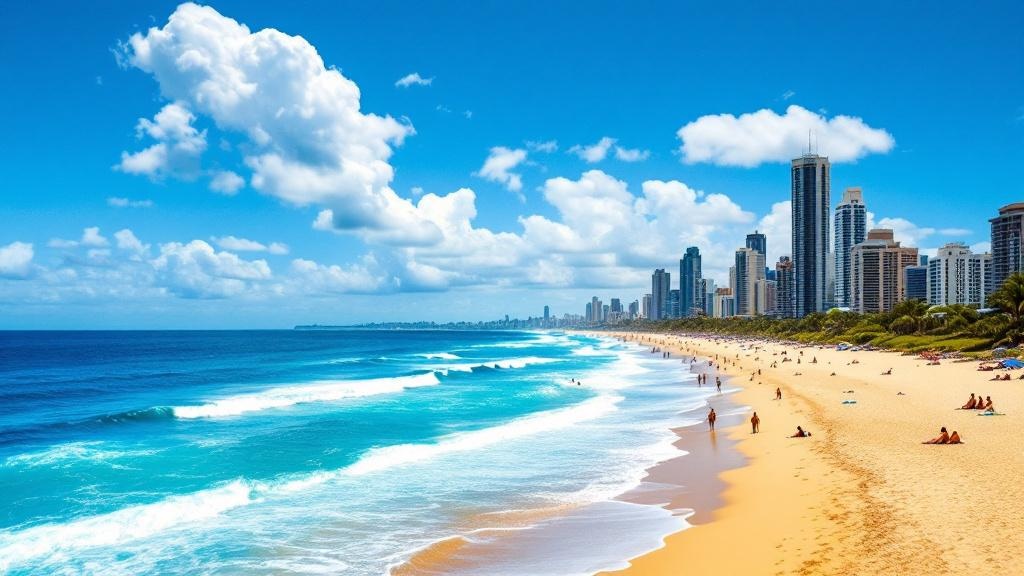
Visitor Guide · Broadbeach Gold Coast 2026
Broadbeach Weather — Month by Month Guide
Gold Coast’s subtropical climate means sunshine almost year-round. Here’s what to expect every month — and the best time to visit.
Broadbeach has one of Australia’s most reliably good climates. As a local, I genuinely don’t think about the weather much — most of the year it’s warm, sunny, and the beach is inviting. But there are real seasonal differences worth understanding before you book, especially if you’re visiting from interstate or overseas.
The Gold Coast sits in a subtropical zone, which means two distinct seasons: a warm, humid wet season from roughly November through March (average highs 28–32°C, occasional storms), and a dry season from April through October that’s warm and mostly clear (average highs 22–27°C). Neither season is bad — the wet season just comes with afternoon thunderstorms a few times a week, while the dry season is close to perfect.
The question isn’t whether Broadbeach will have good weather — it almost certainly will. The question is what type of weather you prefer, and whether you’re willing to trade some heat and occasional storms for lower accommodation prices and fewer crowds.
Weather at a Glance
- Best overall months: April, May, September, October — warm, dry, clear skies
- Hottest months: December–March (28–32°C), some afternoon thunderstorms
- Coolest months: June–August (18–23°C) — still warm enough to swim on most days
- Peak season: December–January school holidays and Easter — book early
- Whale watching season: June–October (humpbacks migrating past Broadbeach)
| Month | Avg High | Avg Low | Rain Days | Conditions | Best For |
|---|---|---|---|---|---|
| January | 29°C | 22°C | 14 | Hot, humid, afternoon storms | Beach, swimming |
| February | 29°C | 22°C | 14 | Hottest month, cyclone risk low | Beach, theme parks |
| March | 28°C | 21°C | 13 | Hot, wet season tailing off | Beach, events |
| April | 26°C | 19°C | 8 | Ideal — warm and dry | Everything |
| May | 24°C | 17°C | 7 | Perfect — Blues on Broadbeach | Everything, festivals |
| June | 22°C | 15°C | 7 | Mild and clear, whale season starts | Coastal walks, whale watching |
| July | 21°C | 13°C | 5 | Driest month — cool evenings | Outdoor dining, events |
| August | 22°C | 14°C | 5 | Clear skies, comfortable | All outdoor activities |
| September | 25°C | 16°C | 5 | Warming up — excellent conditions | Everything |
| October | 26°C | 18°C | 8 | GC 500, Groundwater Festival | Everything, events |
| November | 28°C | 20°C | 11 | Summer arriving, some humidity | Beach, swimming |
| December | 29°C | 22°C | 12 | Peak summer — hot and lively | Beach, Christmas atmosphere |
Summer in Broadbeach (December–March)
Summer on the Gold Coast is hot, humid, and exhilarating. Average highs sit around 28–32°C with warm nights that rarely drop below 20°C. The ocean temperature peaks at 25–27°C — perfect for long beach sessions.
The trade-off is humidity and afternoon storms. Broadbeach regularly experiences short, sharp thunderstorms in the afternoon during summer — typically 3–4pm, lasting 30–90 minutes, then clearing. These aren’t all-day events; most summer days start sunny, build to storms in the afternoon, and clear for a beautiful evening. Learn to read the sky and plan beach time for mornings.
December and January coincide with school holidays — this is peak season, with the highest accommodation prices, fullest beaches, and busiest restaurants. If you want the classic summer Gold Coast experience, this is it. If you prefer quieter beaches and lower prices, avoid these months.
February and March see the wet season gradually wind down — still warm, but storm frequency decreases toward the end of March.
Autumn & The Best Visiting Window (April–May)
April and May are, in my honest opinion, the best months to visit Broadbeach. The humidity drops, the storms largely disappear, and you’re left with warm sunny days (24–26°C), cool evenings, and a beach that’s comfortable without being overwhelming.
May hosts Blues on Broadbeach — one of Australia’s best free music festivals, transforming the suburb across four days in mid-May. The 2026 edition runs 14–17 May. If you can align a visit with this event, Broadbeach in May is genuinely special.
The ocean is still warm from summer (24–25°C) and the beaches are noticeably less crowded than December–January. Accommodation prices drop significantly from peak season rates.
Winter in Broadbeach (June–August)
Gold Coast winters are mild by any national standard. Average daytime temperatures sit around 21–23°C — locals call this cold; visitors from Melbourne or Sydney will find it pleasantly warm. Evenings cool to 13–16°C, which means a jacket for dinner but nothing approaching the winters you might be used to.
July is the driest month of the year — often a full week of clear, cloudless days with zero rain. The ocean temperature drops to around 20–21°C, which is cool enough that some people choose not to swim but perfectly manageable for those who like a refreshing ocean dip.
Winter is excellent for coastal walks, outdoor dining (comfortable without summer’s heat and humidity), and whale watching — humpback whales migrate north past the Gold Coast from June through October, and whale watching tours operate from nearby Surfers Paradise and Currumbin.
Spring & Event Season (September–October)
Spring brings rising temperatures, lower rainfall, and two of Broadbeach’s biggest events: the Gold Coast 500 Supercars Championship (October) and Groundwater Country Music Festival (October). September and October are arguably the second-best visiting window after April–May.
Temperatures climb back to 25–27°C by October with relatively low humidity. The ocean warms to 22–23°C. Accommodation prices are still below peak season (December–January) but rising.
Note: the Gold Coast 500 and Groundwater Festival run concurrently in late October, creating very high demand for accommodation. Book early if your visit overlaps.
What to Pack for Broadbeach
Queensland has some of the highest UV indices in the world — the UV can exceed 11 (extreme) on clear summer days before noon. Reef-safe SPF 50+ is recommended. Apply before you reach the beach, not after — by the time you feel sunburn starting, it’s already done. Reapply every 90 minutes.
December–March temperatures mean light cotton or linen for evenings out, swimwear for beach days, and a light layer for air-conditioned restaurants. Most Broadbeach restaurants don’t require formal dress — smart casual covers everything.
June–August evenings drop to 13–16°C — comfortable for outdoor dining in a light jacket. Locals dress like it’s freezing; visitors from cold climates often find the evening temperature pleasant. Pack one warm layer for evenings and you’ll be fine.
Afternoon storms December–March are short but heavy. A compact umbrella or planning to be indoors between 2–5pm eliminates the issue. Most days start and end beautifully — the storms are the middle-of-the-day inconvenience, not all-day rain.
Frequently Asked Questions
April, May, September, and October are the best months — warm (22–26°C), low rainfall, and comfortable humidity. May is exceptional if it overlaps with Blues on Broadbeach (14–17 May 2026). These months avoid both the summer humidity/storms and the peak-season crowds and prices of December–January.
Broadbeach receives most of its rain in summer (November–March) as afternoon thunderstorms — typically short, heavy, and over within an hour. The dry season (April–October) has very little rain, with July being the driest month. Annual rainfall in Broadbeach is around 1,400mm, but it’s concentrated in summer and rarely affects full days of plans.
Yes — the ocean temperature drops to around 20–21°C in July–August, which is cool but very swimmable for most people. Locals think it’s freezing; visitors from Melbourne or Sydney find it warmer than any beach they’re used to. The beach is patrolled year-round and much less crowded in winter than summer.
January and February are the hottest months — average highs of 29–30°C with ocean temperatures reaching 25–27°C. Humidity is high and afternoon thunderstorms are common. It’s classic Gold Coast summer weather: hot mornings on the beach, afternoon storms, beautiful evenings. Wet’n’Wild water park is the best decision you can make on a 33°C February day.
Not very. Daytime temperatures in June–August average 21–23°C — warm enough for t-shirts and shorts in the middle of the day. Overnight lows drop to 13–16°C. Frost and sub-10°C temperatures essentially never happen in Broadbeach. If you’re visiting from a colder climate, a Gold Coast winter will feel like a pleasant spring.
Plan Your Broadbeach Visit
Browse activities, tours, and experiences available year-round in Broadbeach and the Gold Coast.
Written and maintained by a Broadbeach local. I update this guide regularly to keep it accurate.